Vanilla Biscuit Covered Cake
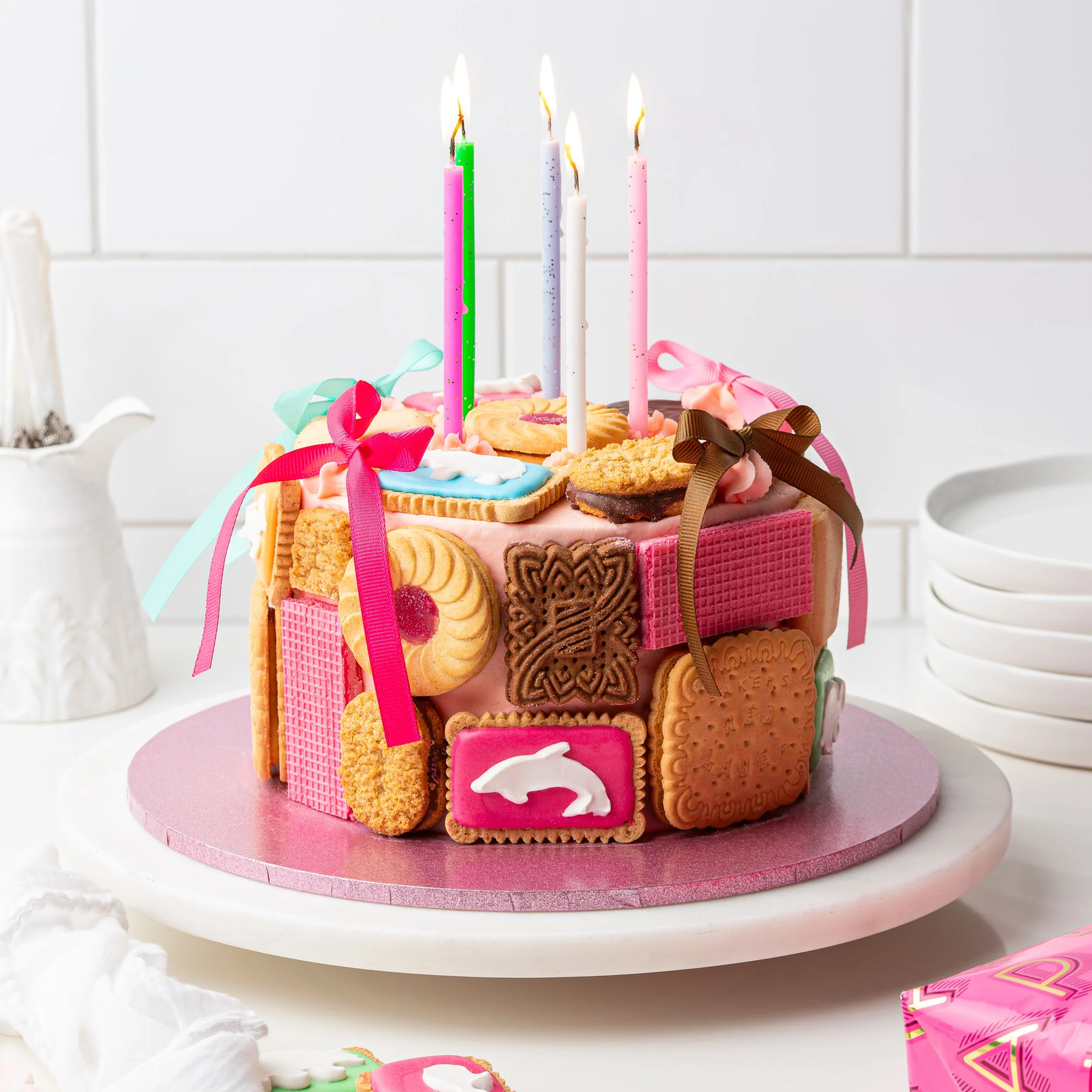
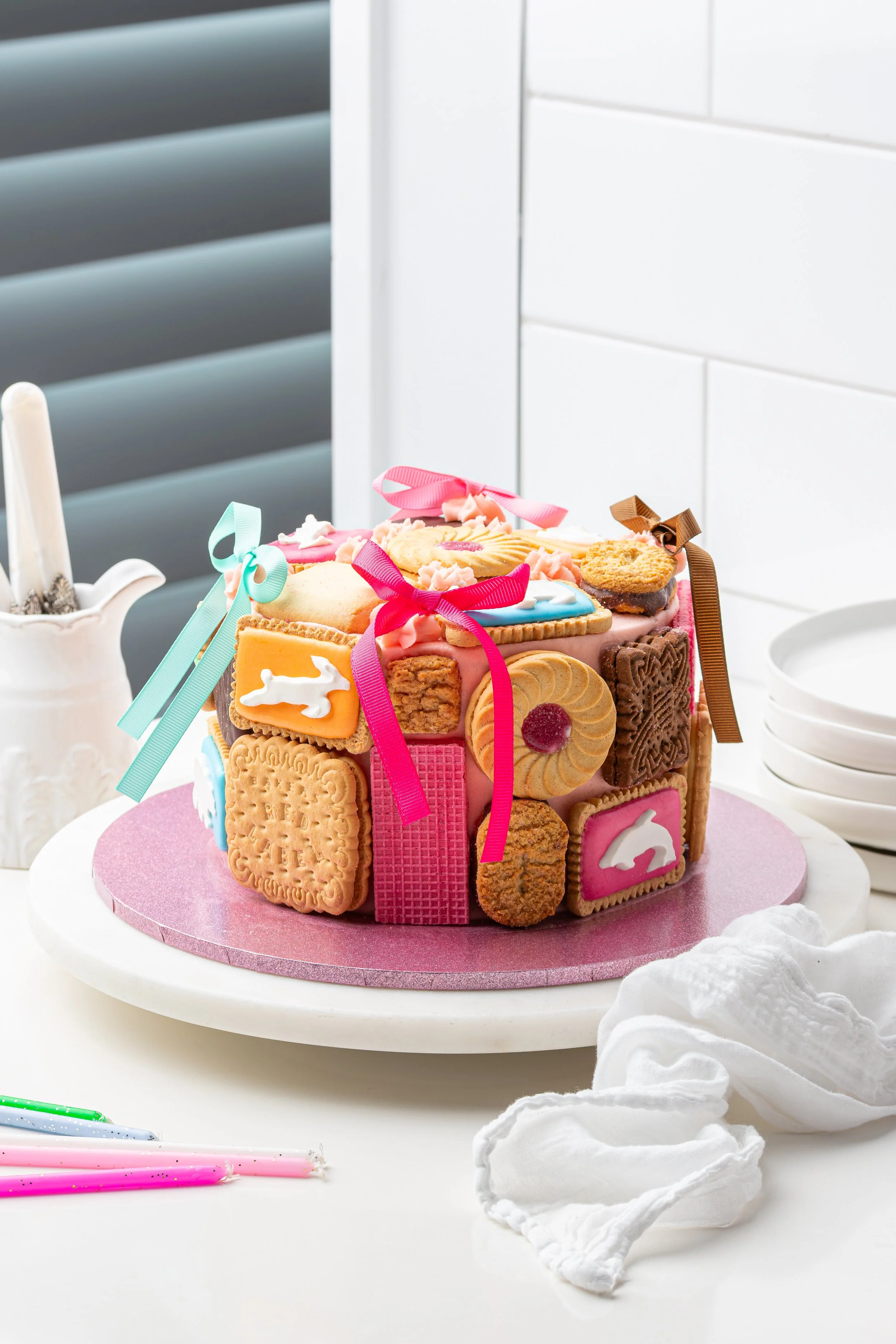
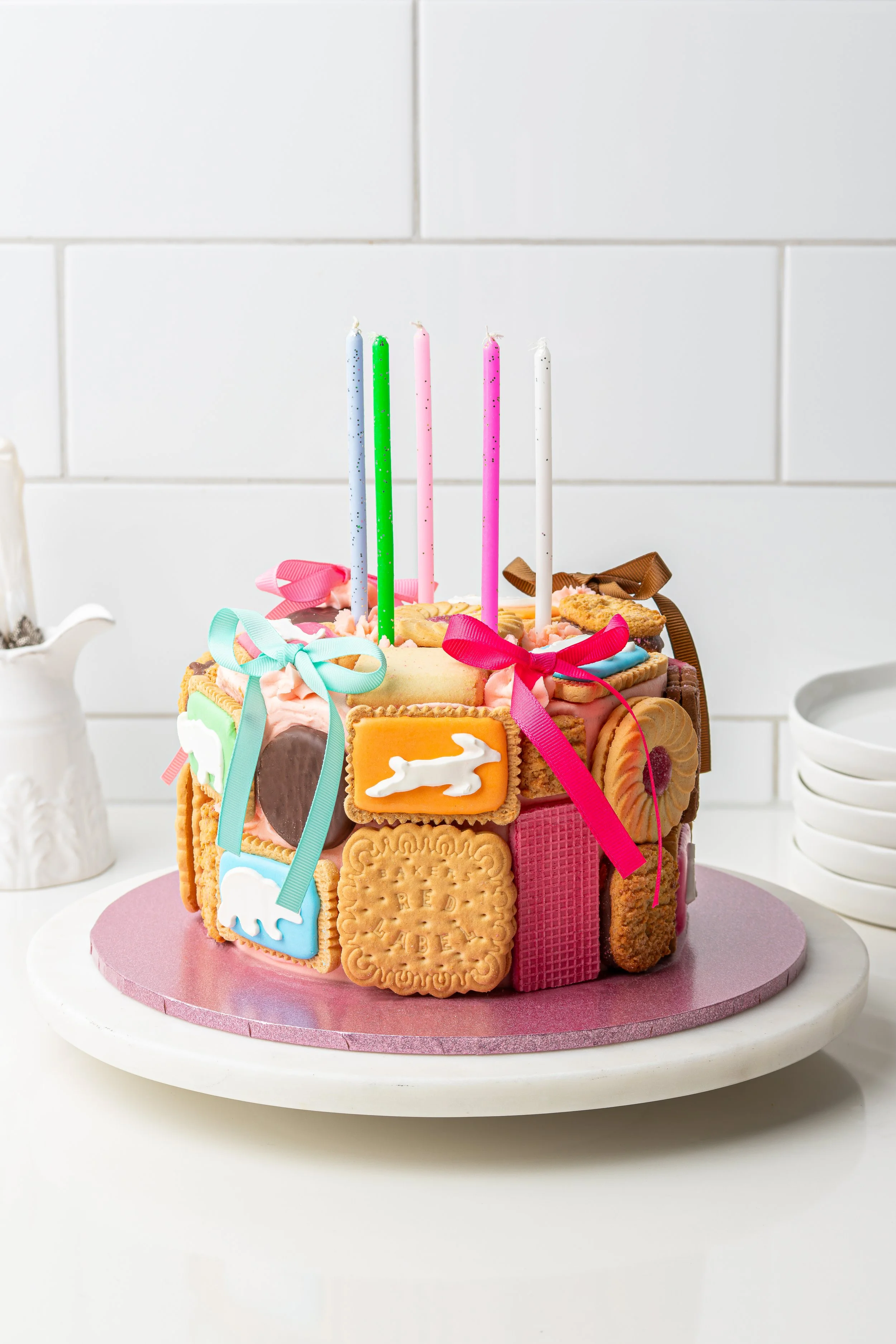
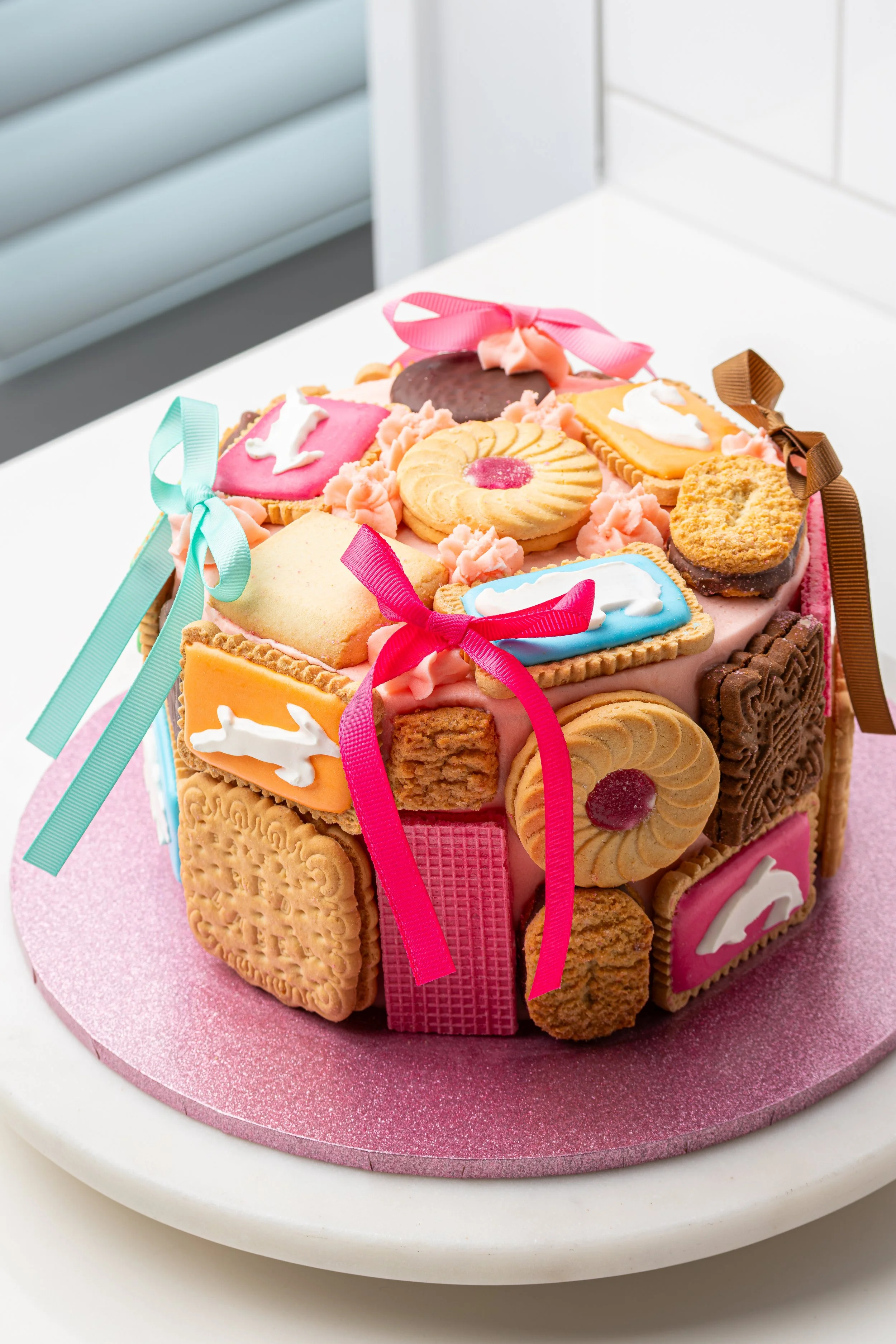
A classic, vanilla birthday cake with sweet buttercream icing, covered in colourful biscuits! The easiest cake you will ever decorate, and the assortment of your favourite biscuits will cater to all of the birthday guests!
RECIPE NOTES: The addition of cornflour in the cake batter makes for a soft, fluffy cake. Apart from separating the eggs, this recipe is fairly easy. If you don’t have self-raising flour, use plain/all-purpose/cake wheat flour with baking powder instead (2 teaspoons/10ml baking powder for every 1 cup/150g of flour)
Enough for a layered 18cm or 20cm diameter round cake (16 generous slices, 32 small child size portions)
VANILLA SPONGE CAKE BATTER
eggs, 3
water (cold, tap water), 60ml (1/4 cup)
oil, 60ml (1/4 cup) - a neutral flavour oil works well
vanilla (extract or paste), 15ml (1 tablespoon)
sugar (caster), 200g (250ml or 1 cup)
self-raising flour, 150g (250ml or 1 cup)
cornflour, 50g (80ml or 1/3 cup)
VANILLA BUTTERCREAM
butter (unsalted), 100g
icing sugar, 330g (2 cups)
vanilla (extract or paste), 15ml (1 tablespoon)
milk (full fat), 30ml (2 tablespoons)
salt (fine), 1.25ml (1/4 teaspoon)
food colouring, a drop - optional
TO DECORATE
biscuits, about 200 - 300g
1. For the cake, preheat the oven to 180°C (160°C fan) and line with baking paper (or grease well) two 18cm or 20cm diameter round cake tins.
2. Separate the eggs, placing the yolks in a large mixing bowl and the whites in another clean, dry mixing bowl (or the bowl of a free-standing mixer).
3. To the egg yolks, add all the wet ingredients as well as the caster sugar, then whisk until uniform.
4. Add the self-raising flour and cornflour to the egg yolk mixture and whisk until uniform.
5. Beat the egg whites on a high speed until stiff peaks.
6. Fold the beaten egg whites into the batter mixture using a large metal spoon or spatula (at first just a little to loosen the mixture, then gently fold in the rest).
7. Divide the batter between the prepared cake tins and bake until golden and a skewer inserted into the middle comes out clean (approximately 20 - 30 minutes but will depend on your oven and cake tin sizes - try not to overbake the sponges).
8. Once baked, remove the tins from the oven and leave the sponges (in the tins) to cool for 10 minutes or so before turning out onto a cooling rack to cool completely (cover with a clean tea towel to prevent moisture from evaporating).
9. To make the buttercream, roughly chop the butter then place it in a heat proof bowl.
10. Softened the butter for a few seconds in the microwave then transfer it to a large mixing bowl (or the mixing bowl of a free-standing mixer).
11. Add the remaining ingredients and beat well with electric beaters (or a free-standing mixer) for about 5 minutes until light and fluffy.
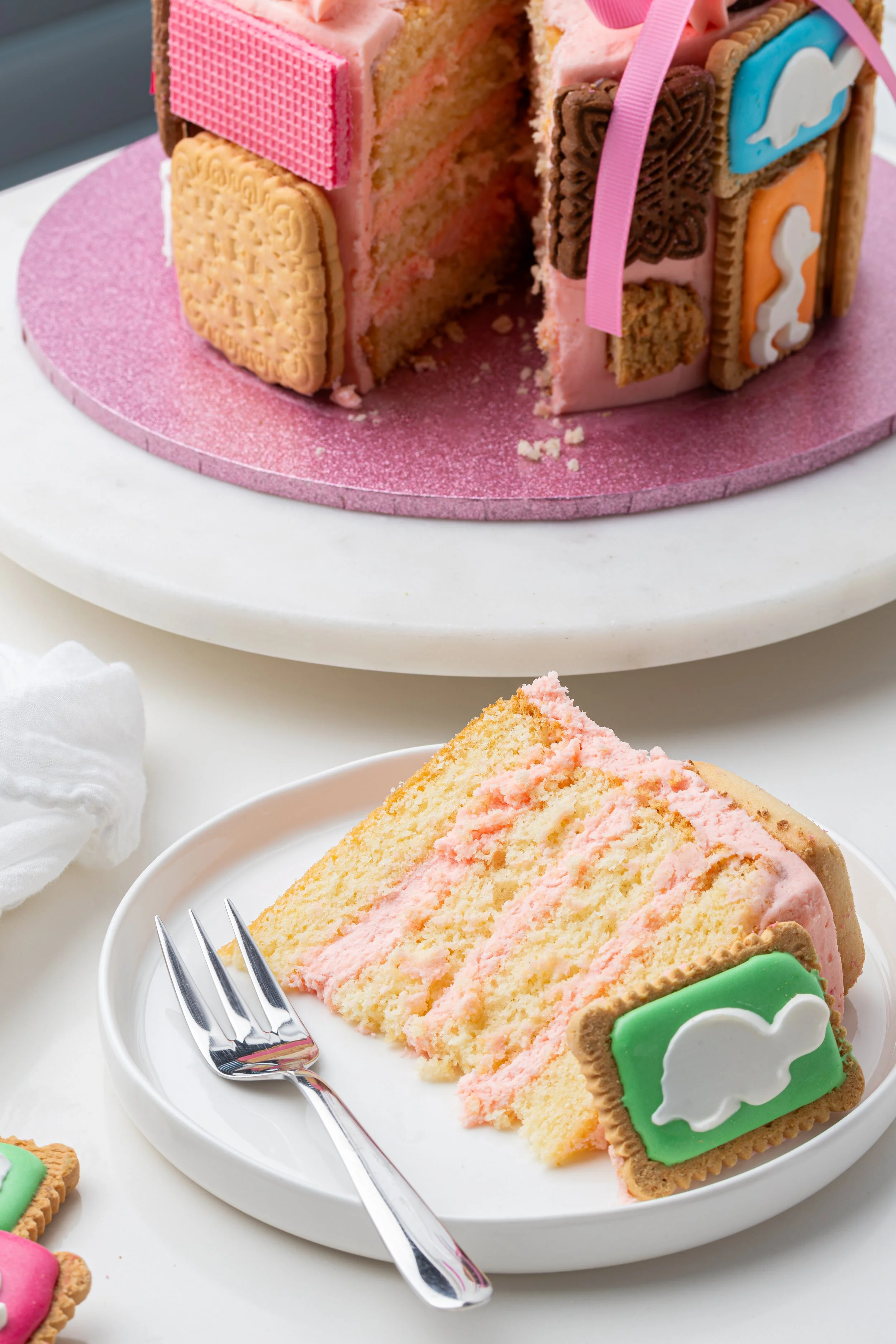
12. To assemble the cake, for a four layered cake divide each sponge in two using a sharp, serrated knife. For a two layered cake, leave the sponges as is (you can trim the tops if they have domed in the oven).
13. Place the first cake layer on a cake board or serving plate.
14. Spread or pipe a layer of buttercream over the top before adding the next layer. Repeat if needed.
15. Cover the top and sides with buttercream.
16. Arrange the biscuits on top and on the sides of the cake. Add a few decorative bows if you like and dots of piping to insert birthday candles.
Store the cake at room temperature.