Sourdough Starter
Making a sourdough starter is not particularly difficult, but you need flour (lots of it), water, time, and patience. This is what works for me.
RECIPE NOTES: Having a sourdough starter is like owning a pet. It requires fresh water, food (flour) and warmth to thrive. It is also incredibly rewarding! If you are new to baking sourdough bread, I recommend making your sourdough starter in summer (if you can) as it is generally much easier then. The warmer temperatures of summer (24–28°C) encourage the growth of the wild yeasts and lactic acid bacteria you want, so your starter becomes active more quickly. In winter, your starter can seem inactive simply because it's too cold. However, it is not impossible and if you feed it daily and keep it warm, most starters come to life within two weeks. You need an electronic scale, a least two glass jars, a couple of elastic bands and a small square of baking paper for this recipe. An instant-read digital food thermometer (to check the water temperature) and a digital room thermometer (to get a feel for the room temperature) is handy too, but not essential.
SOURDOUGH STARTER DAILY FEEDING RECIPE:
flour, 50g - if you are starting out, I highly recommend using wholemeal rye flour as it makes for a great starter! The texture will be thick and pasty (due to its high water absorption). Wholemeal spelt flour works well too and will be easier to mix. However, once your sourdough starter is well established, you can switch to plain flour if you wish.
water, 50g - I recommend bottled spring or filtered water if your tap water is heavily chlorinated (as it can slow down the activity of the wild yeast and beneficial lactic acid bacteria, especially when you are making a new culture from scratch).
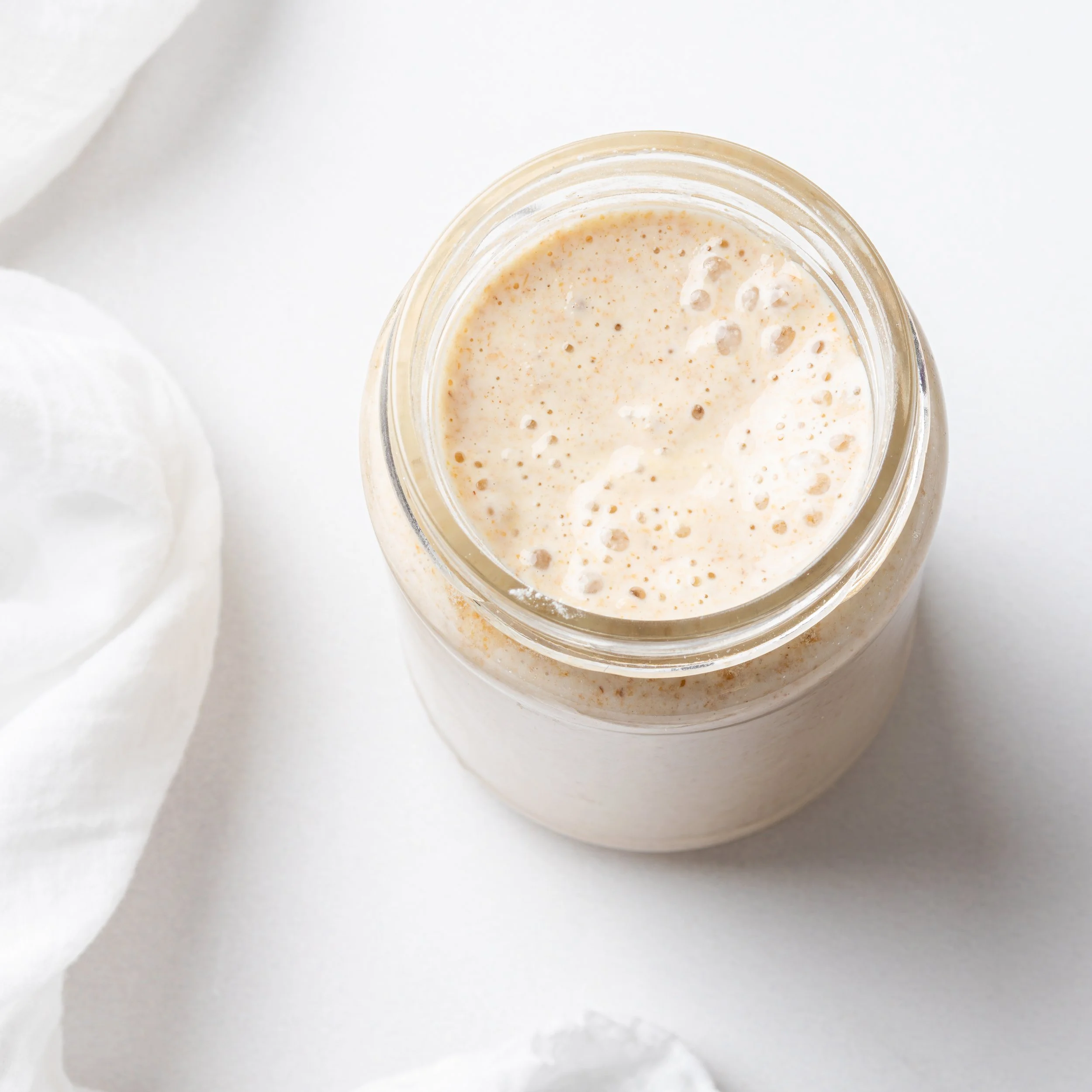
A wholemeal rye flour sourdough starter.
HOW-TO:
DAY 1 - Mark in your calendar when you started your sourdough starter (it is easy to forget).
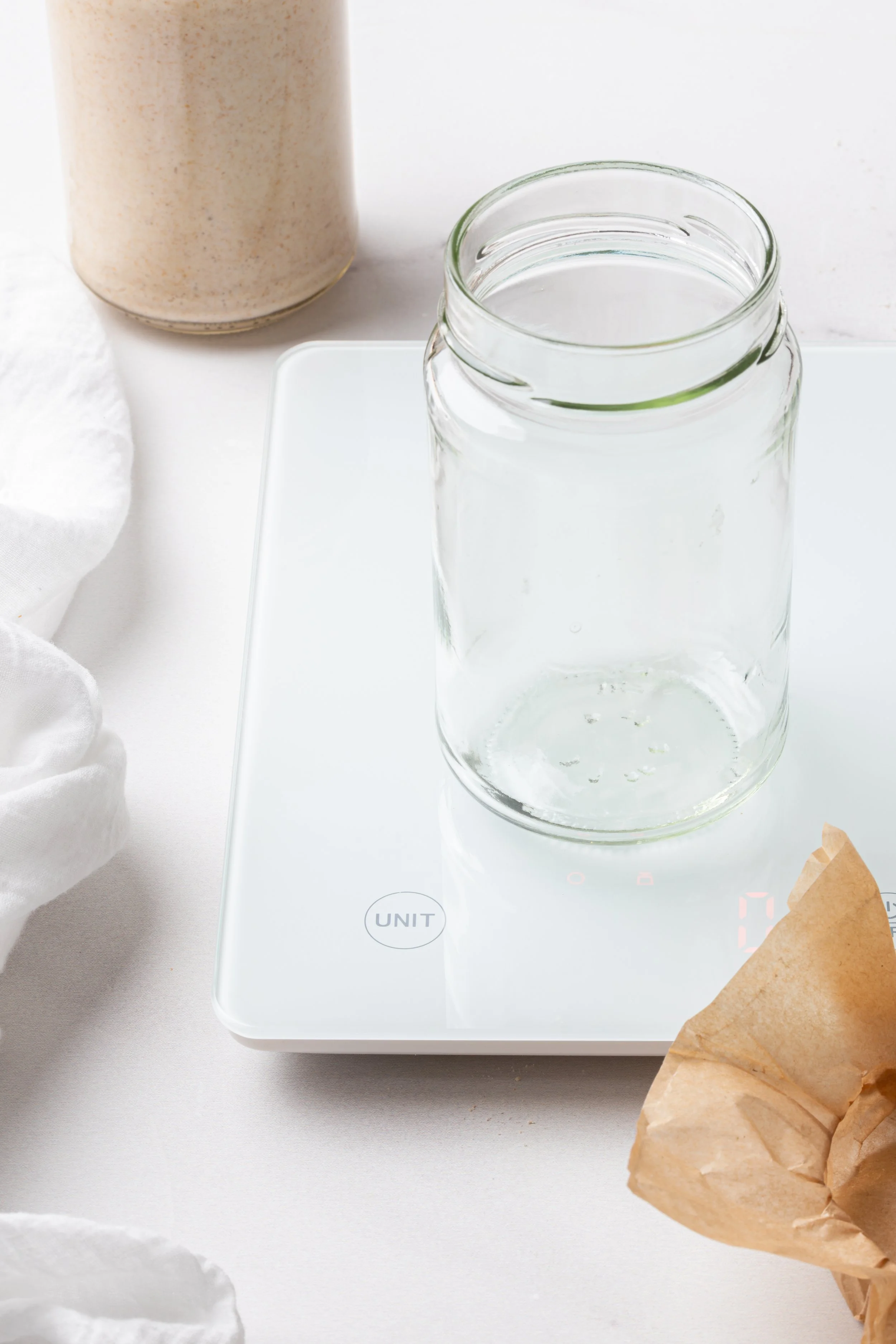
Add 50g of warm (26–28°C) water to a clean jar.
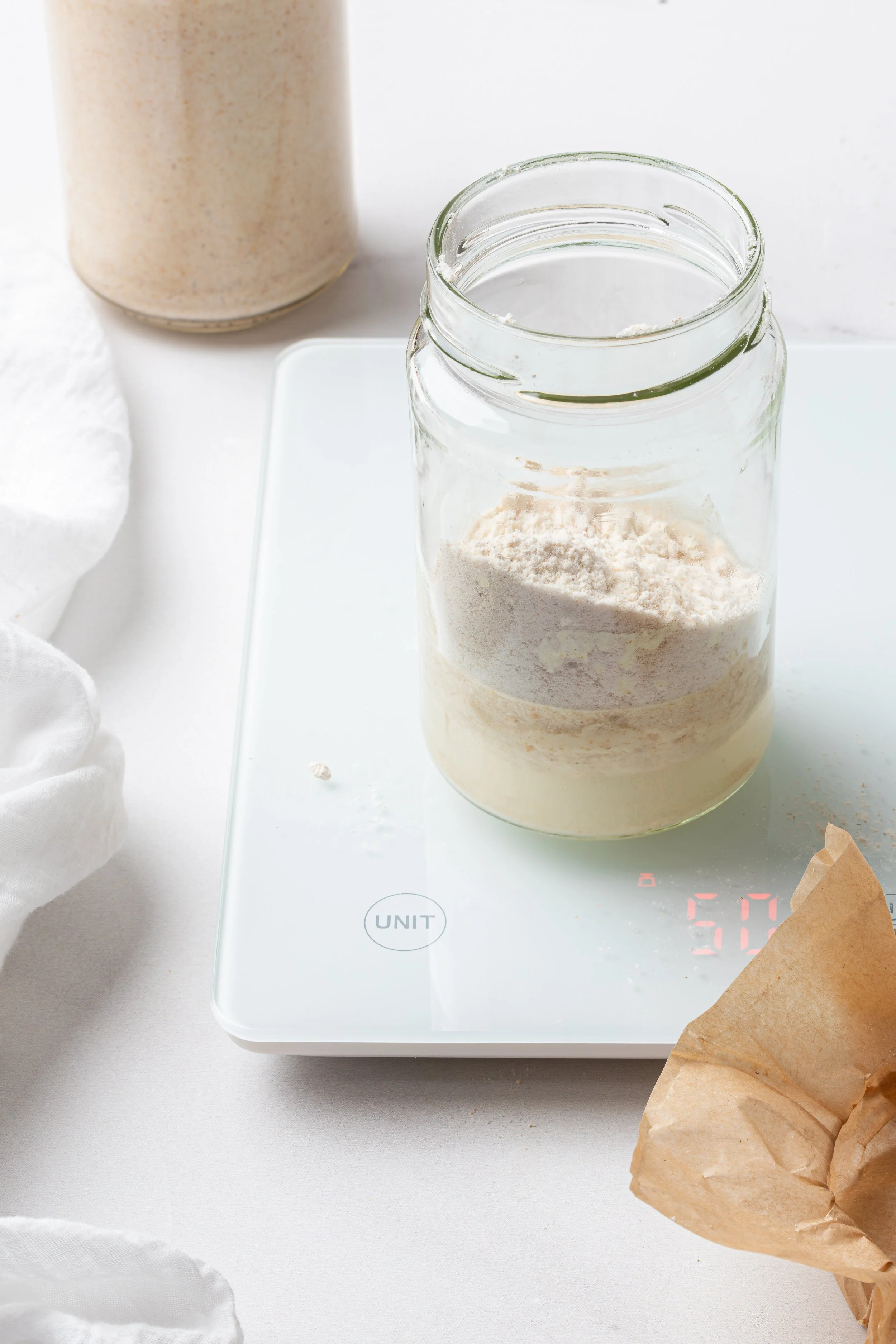
Add 50g of flour and stir well with a spoon. It will be like a thick, flour paste (especially if you use rye flour)
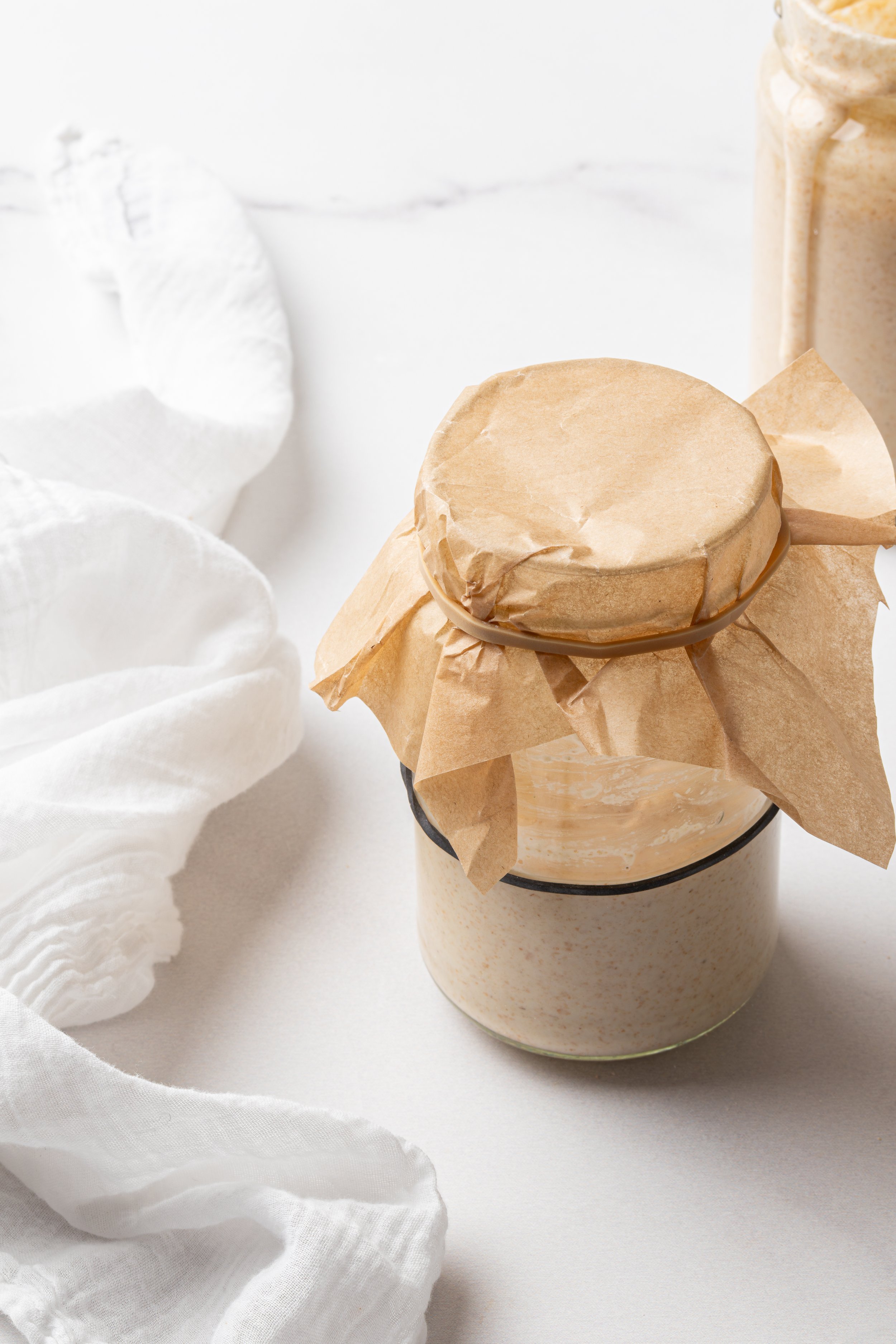
Cover the jar with a small square of baking paper and secure it with a rubber band (you don’t want a tight-fitting lid).
Leave it at room temperature in a warm place (but not in direct sunlight) until day 2. The ideal temperature for making a new sourdough starter is 24–27°C
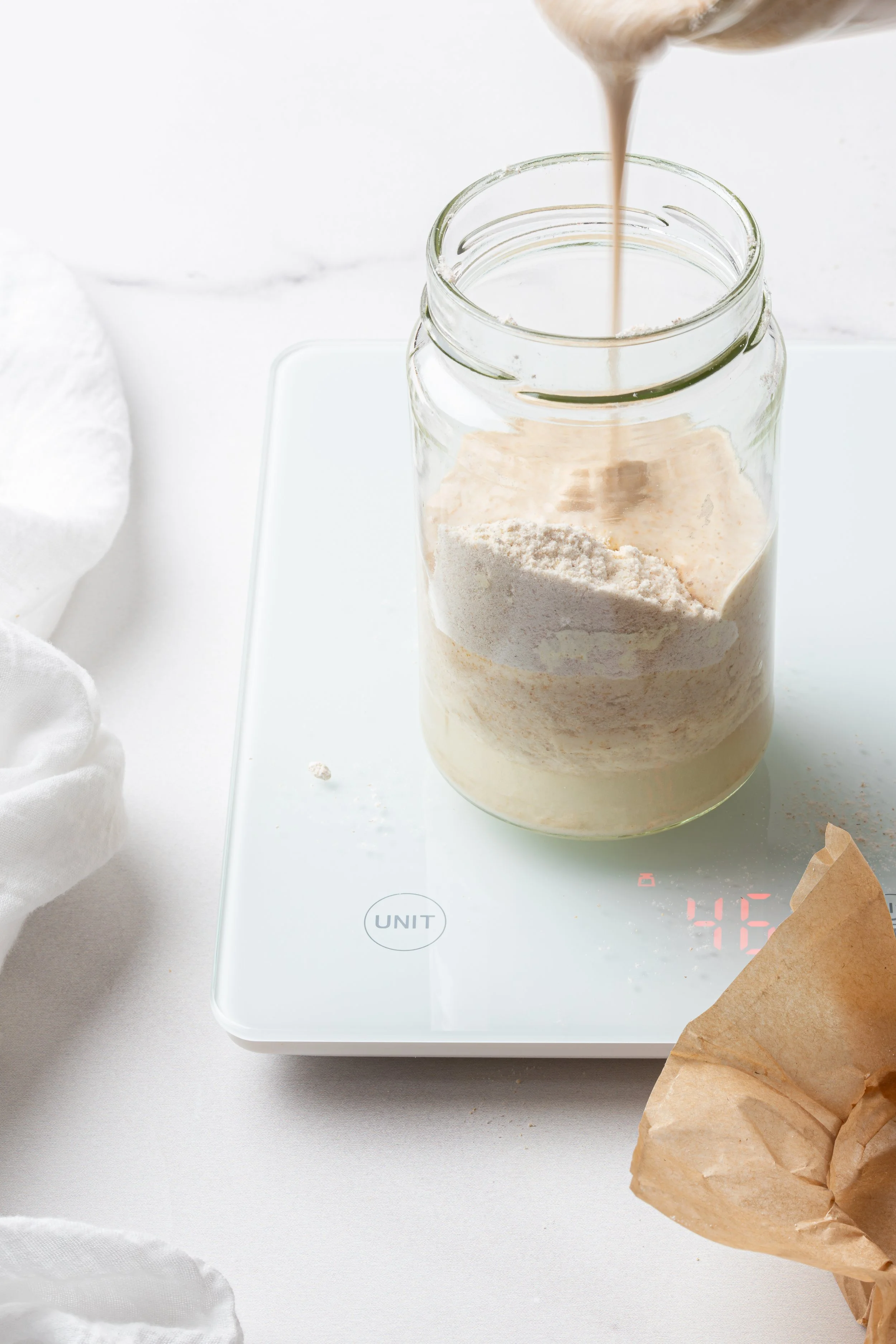
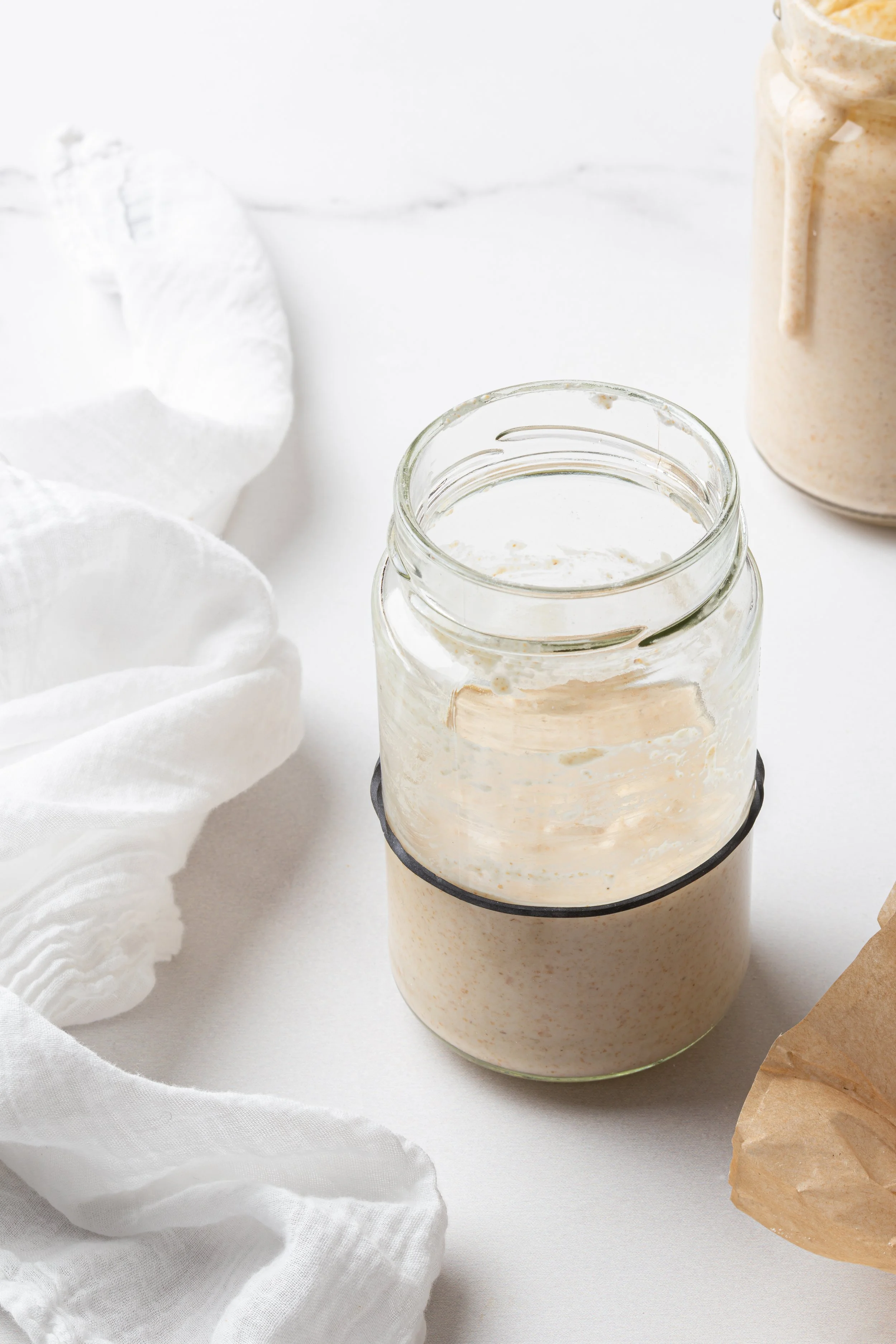
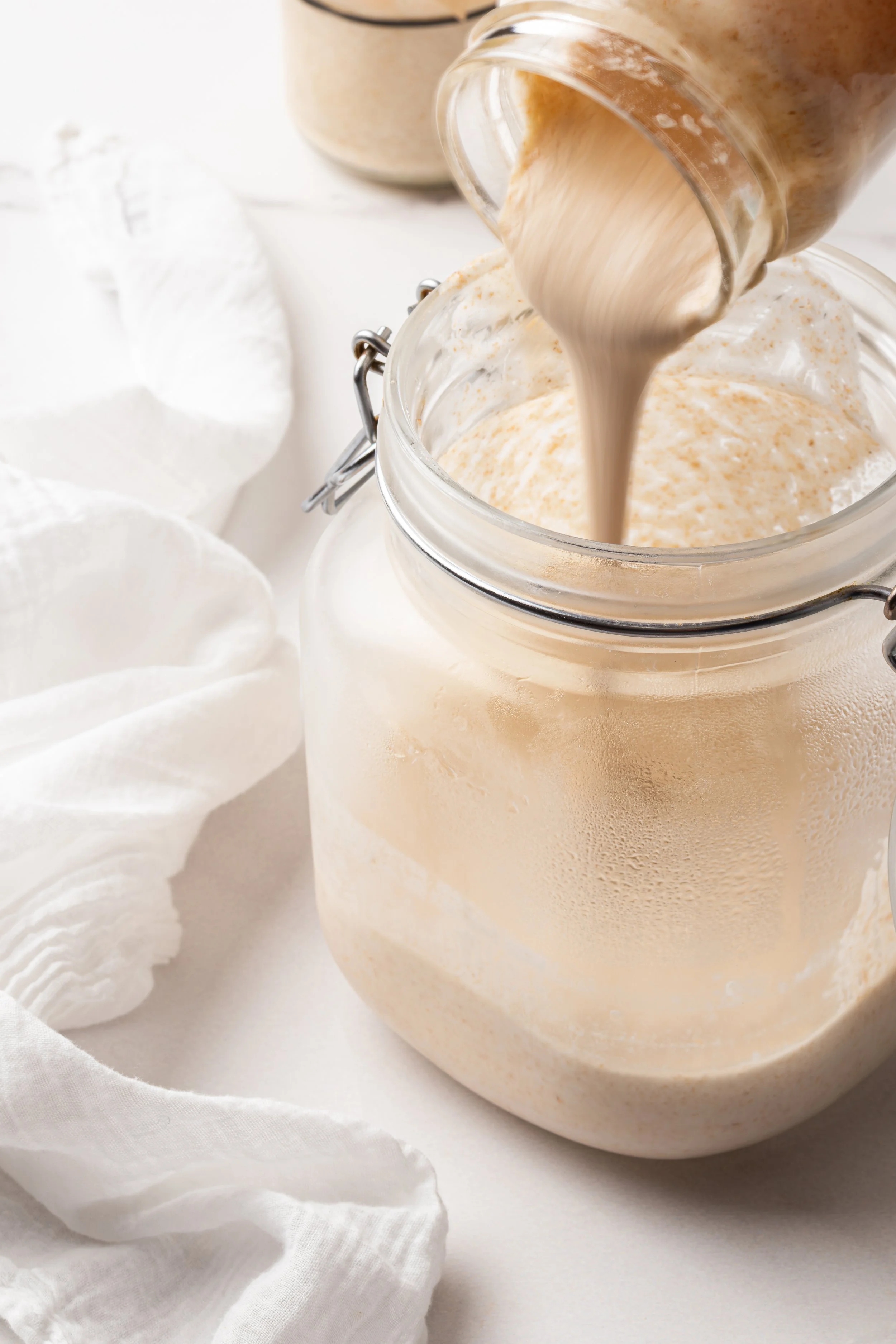
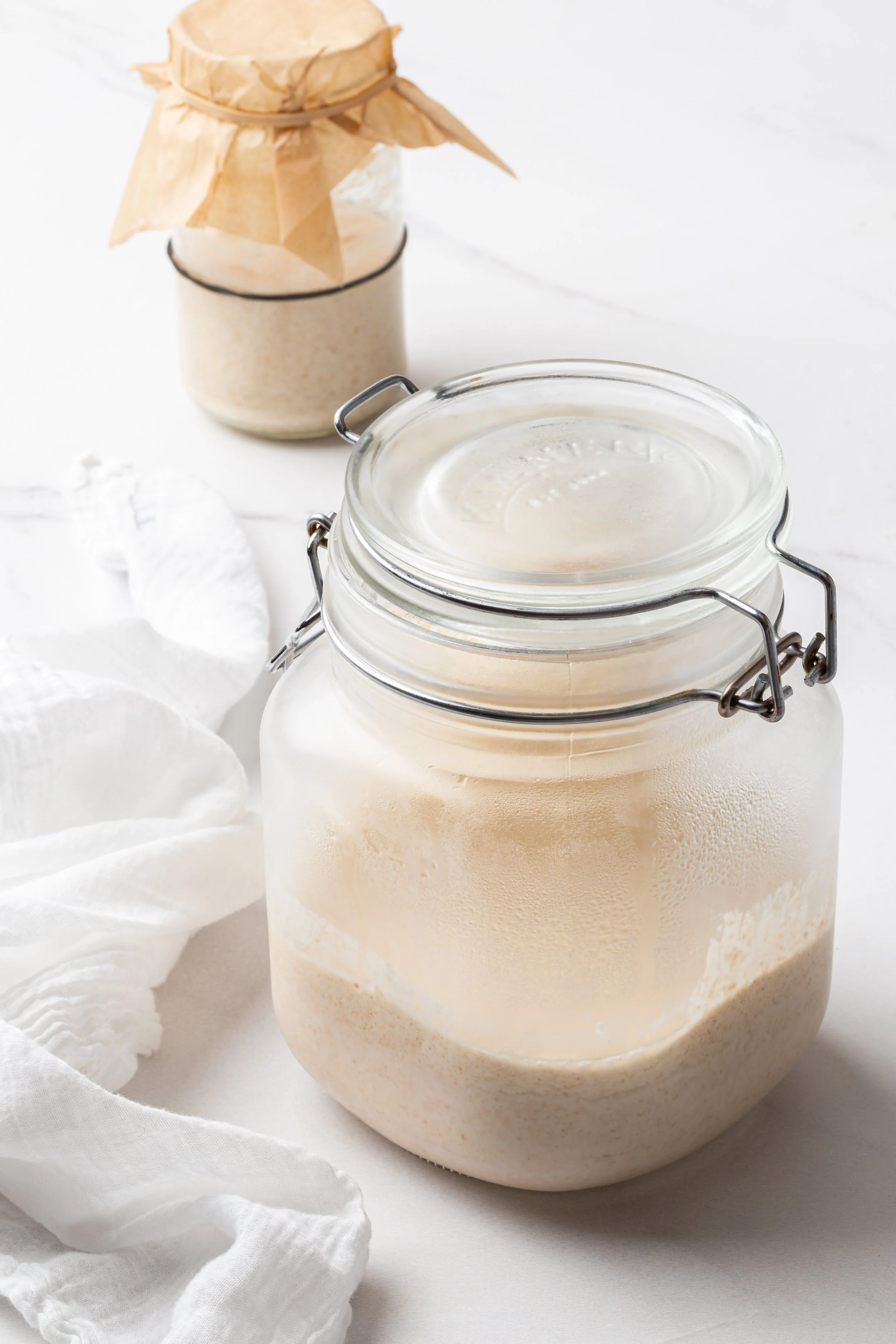
Images below show a starter made from wholemeal spelt flour. Spelt flour makes for a runnier consistency. Rye flour will have a sticky consistency (like wet clay).
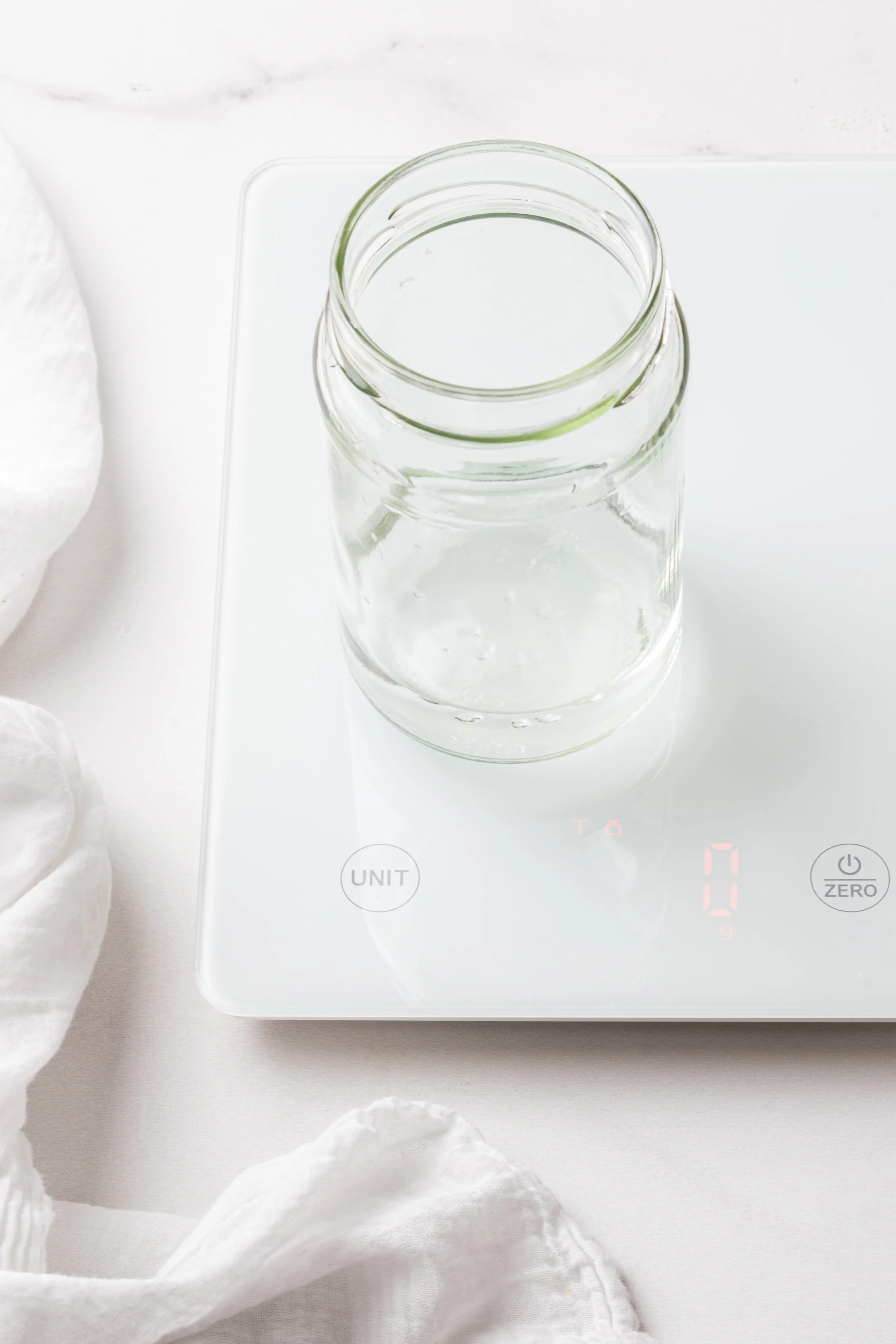
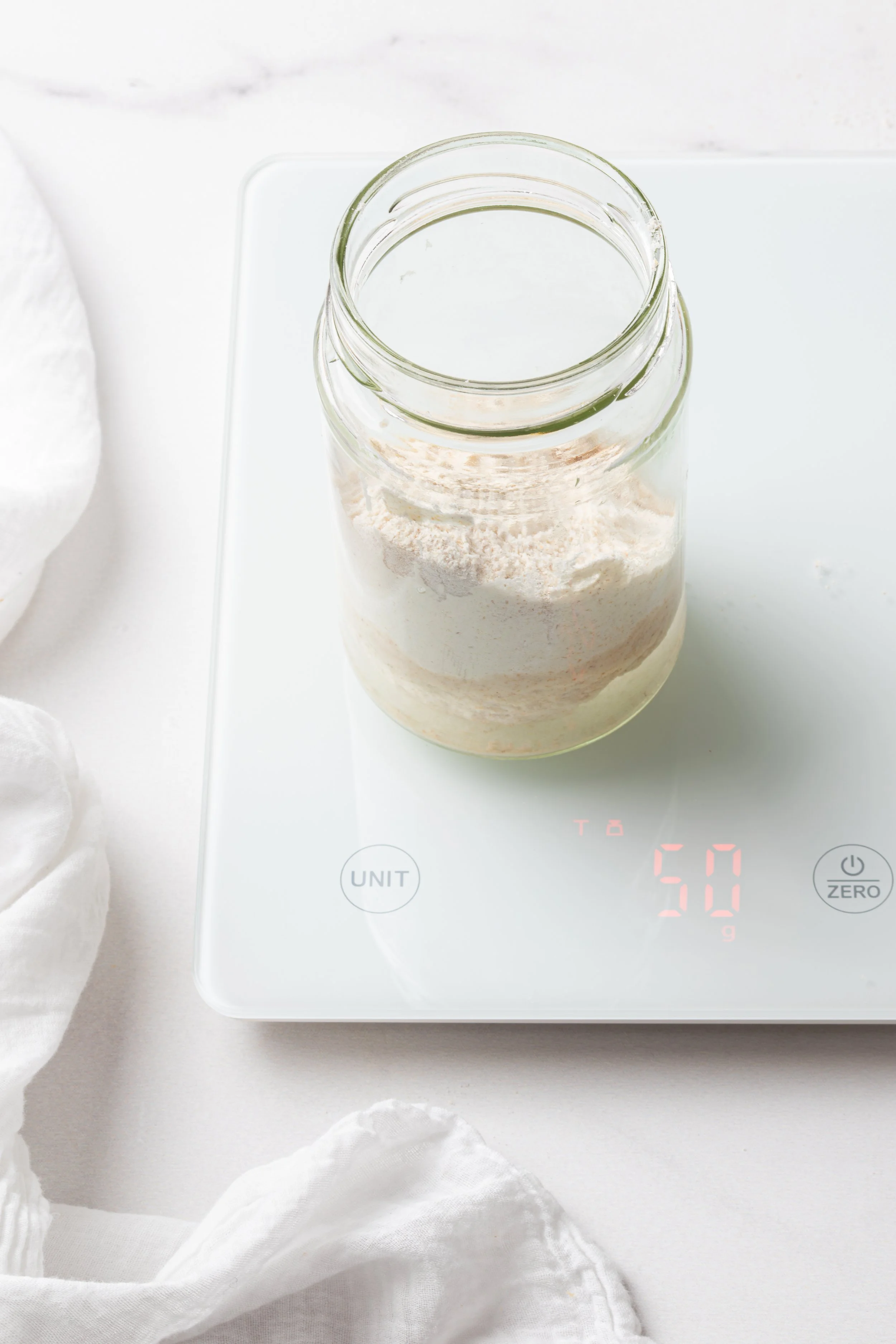
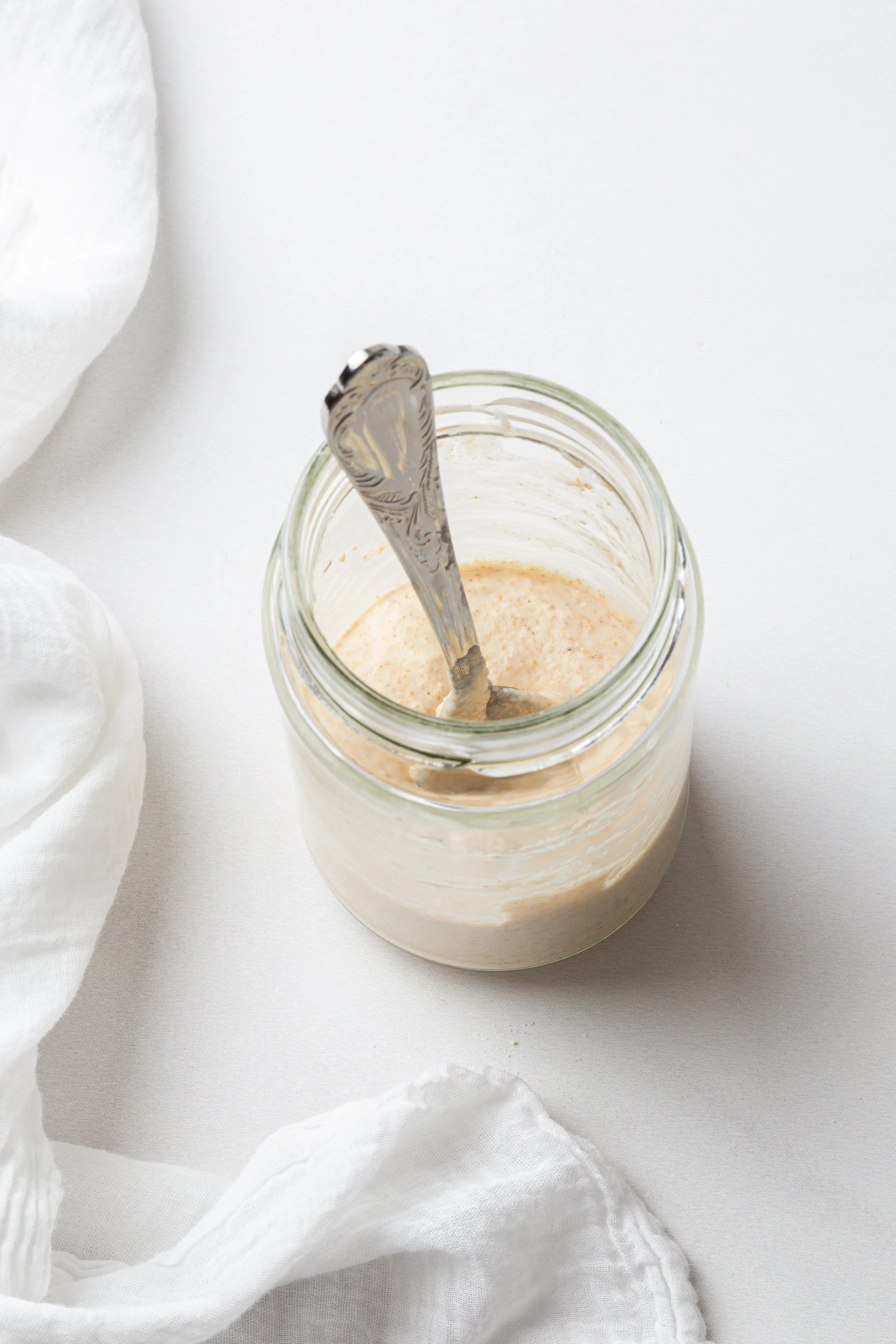
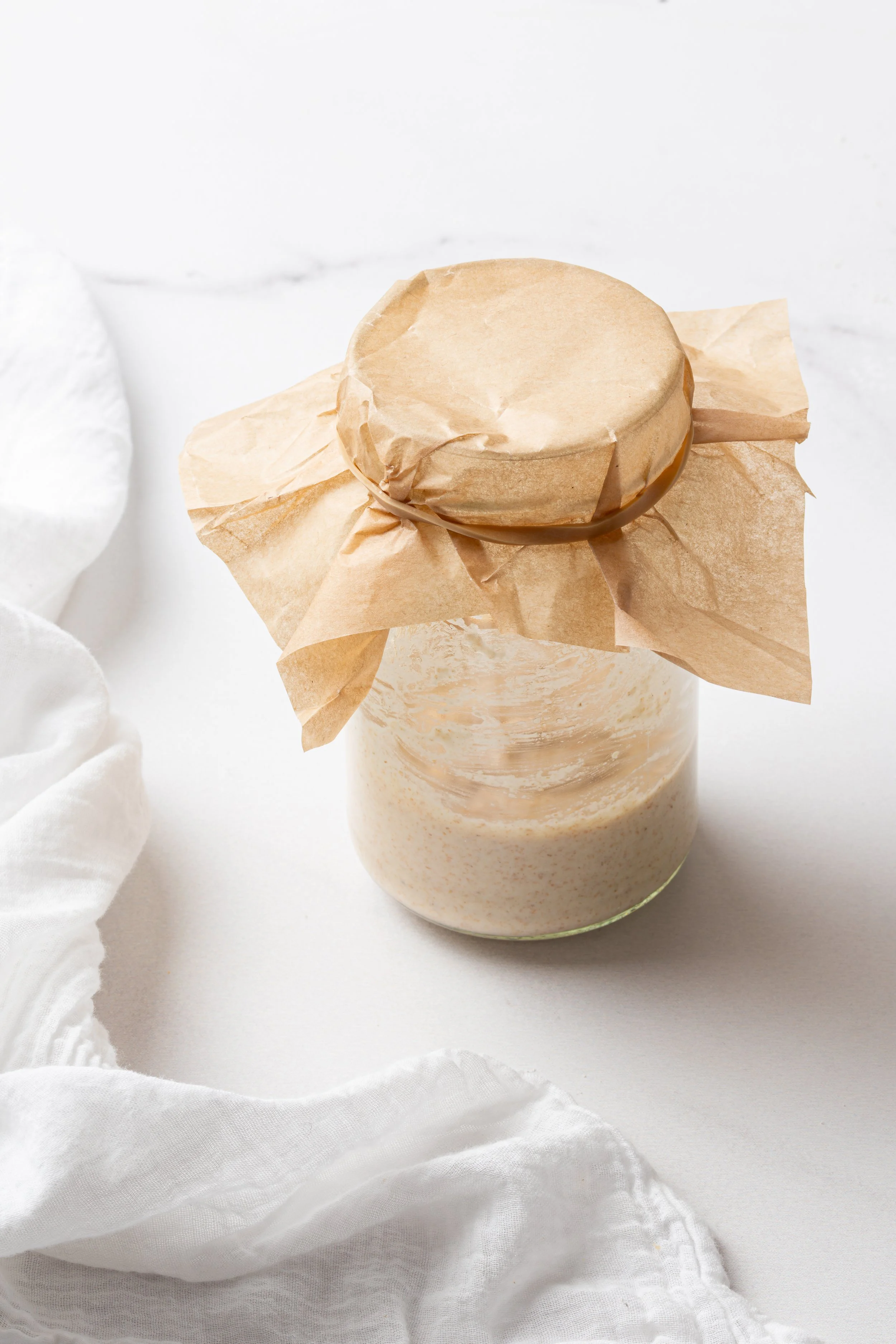
DAY 2 - it will look the same as it did yesterday.
Add 50g of warm (26–28°C) water and 50g of flour to the jar.
Stir again well with a spoon and cover it like you did for day 1.
Leave it again in a warm (24–27°C), room temperature spot until day 3.
DAY 3 - it might have a slightly sour smell - today is when you start discarding some of the mixture
Using another, clean jar, add 50g of water and 50g of flour to the jar.
Add 50g of the sourdough starter mixture from day 2 (you now have a 1:1:1 mixture of water, flour, sourdough starter).
Stir again well.
Cover and leave again in a warm, room temperature spot.
Discard the remaining mixture from day 2 left in the jar and wash the jar ready for day 4.
DAY 4 - you might start seeing a few bubbles in the sourdough mixture
Using the clean jar, add 50g of water and 50g of flour to the jar.
Add 50g of the sourdough starter mixture from day 3 (you will again have a 1:1:1 ratio of water, flour and sourdough starter).
Stir again well and cover.
Discard the remaining mixture from day 3 left in the jar and wash the jar ready for day 5.
DAY 5 - if your sourdough starter has bubbles, you can start collecting the discard instead of throwing it away (it can be used to make the most delicious bakes!)
Using the clean jar, add 50g of water and 50g of flour to the jar.
Add 50g of the sourdough starter mixture from day 4.
Stir again well and cover.
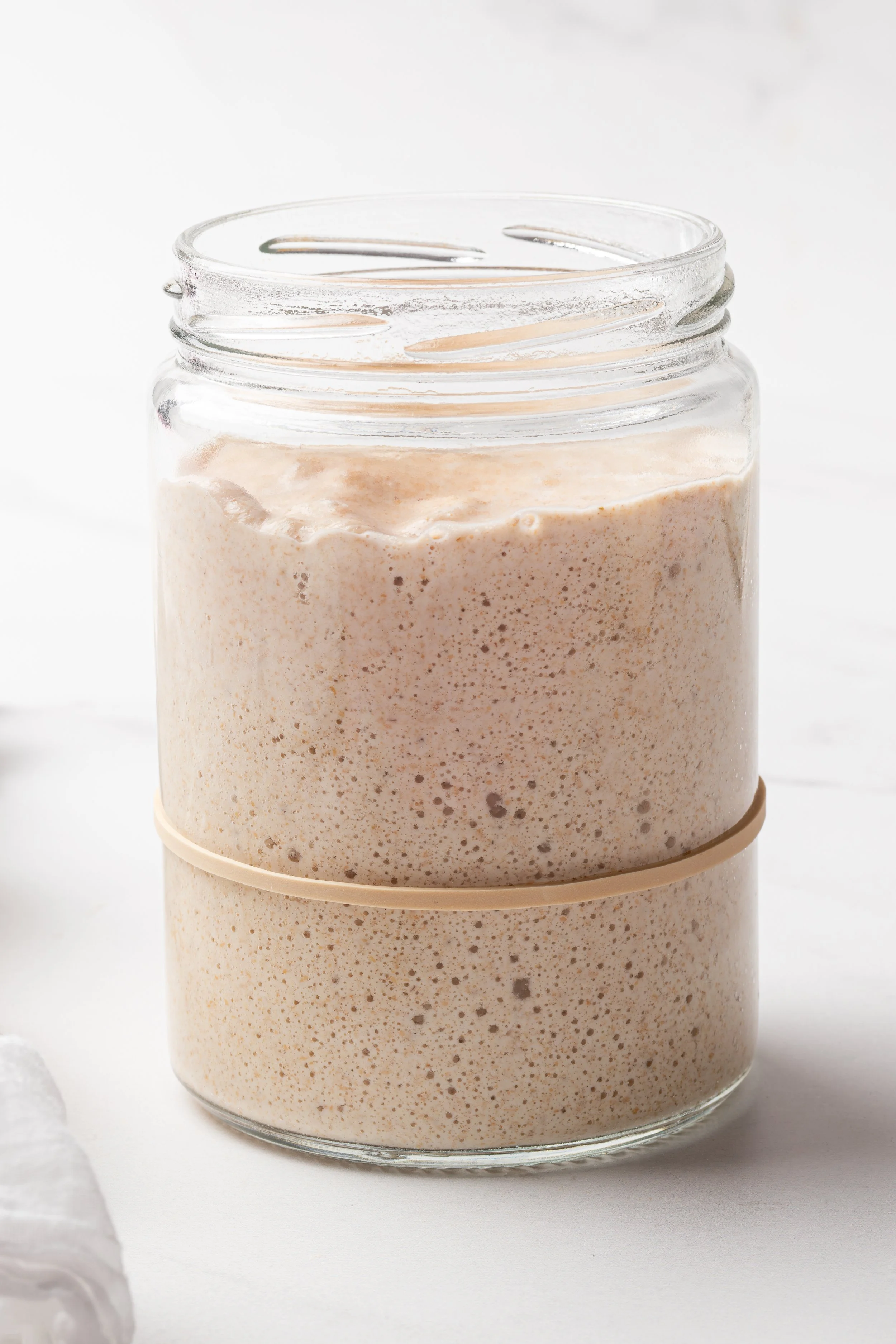
Place an elastic band around the jar to mark the top of the mixture in order to see if it rises between feeds.
You can pour the remaining sourdough mixture from day 4 into a large jar, cover loosely and place it in the fridge until you have enough to bake with (about 2 - 3 feeds).
DAYS 6 to 14+
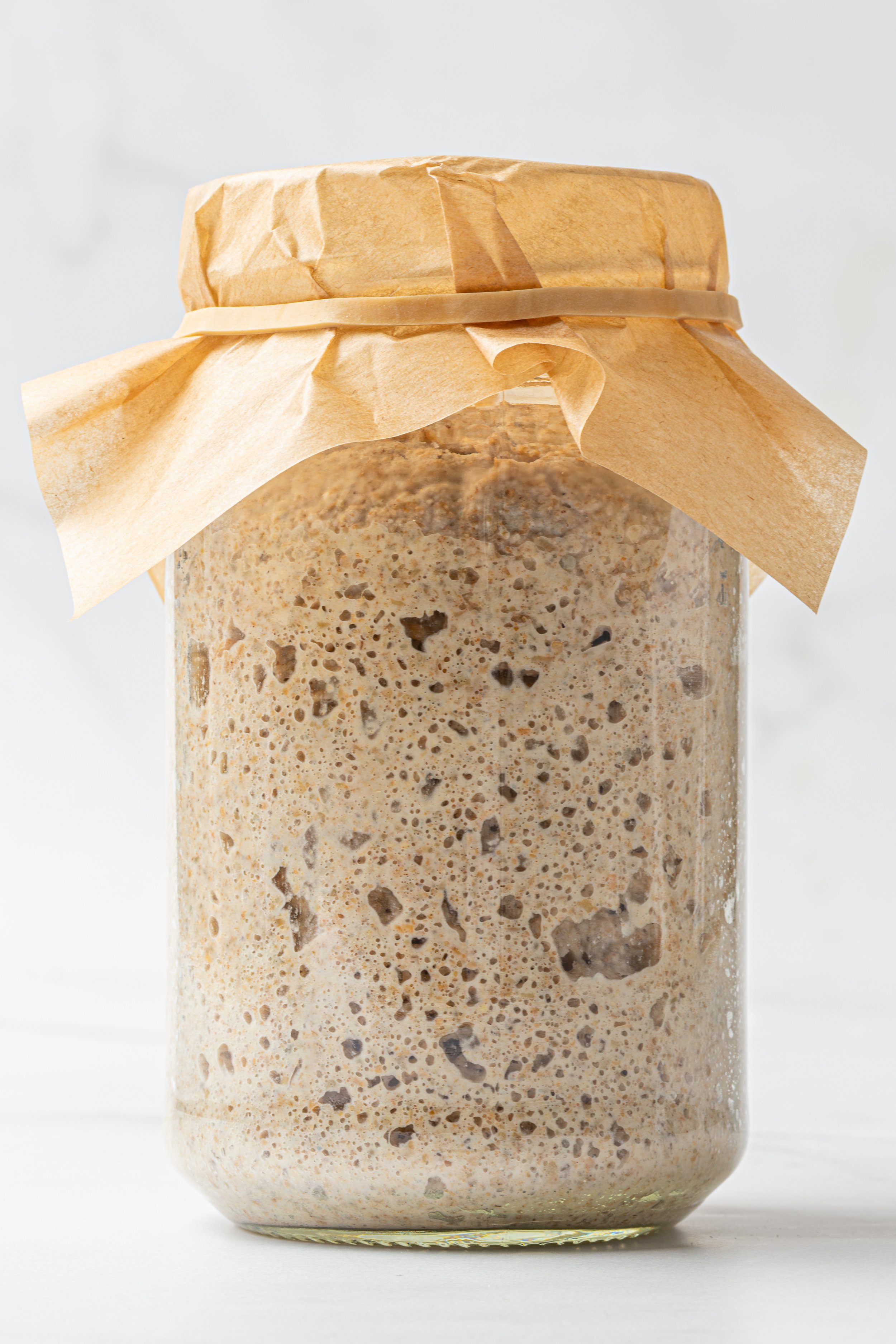
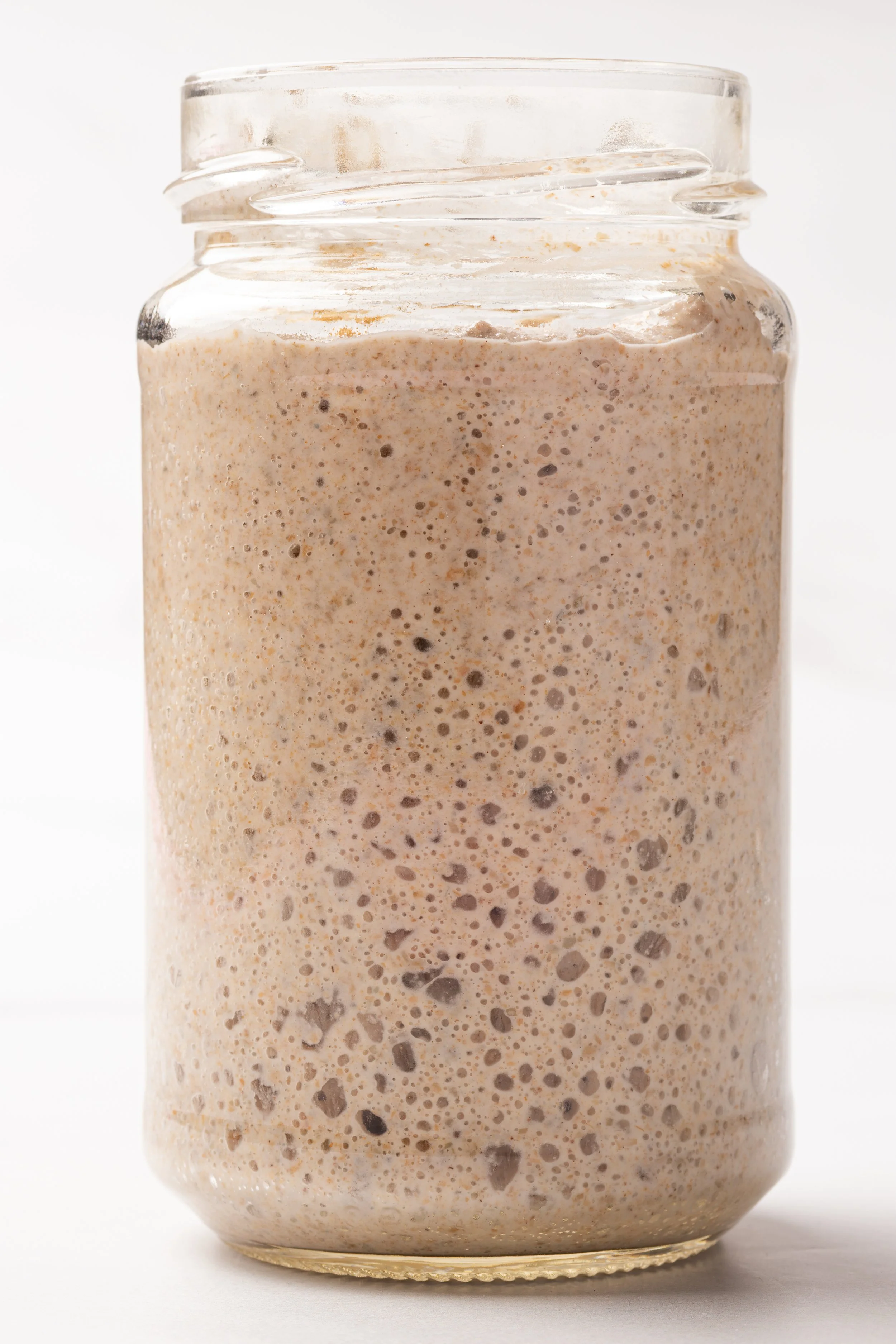
You should start seeing lots of bubbles within the starter, the mixture rising and falling between feeds and it should have a slightly sour smell (like yoghurt).
Keep feeding it daily (sometimes twice daily if it peaks in under 12 hours) and keep it in a warm spot.
WHEN IS IT READY TO USE TO MAKE SOURDOUGH BREAD?
When usually between 7–14 days it:
Doubles in volume within 4–8 hours after feeding.
Is full of bubbles.
Smells pleasantly tangy like yoghurt.
Consistently rises and falls each day.
CAN I TAKE A BREAK FROM FEEDING MY SOURDOUGH STARTER DAILY?
Yes, once established (say after day 5 - 7), a healthy starter can be refrigerated for 1 - 2 weeks at a time and remain mostly unchanged. Feed it (for 100% hydration or 1:1:1, combine 50g water + 50g flour + 50g starter) before you place it in the fridge. If you want to bake with it again, remove it from the fridge and feed it again, keep it in a warm, room temperature spot until active and bubbly. You might have to repeat feeding it every 12–24 hours until it doubles in size within 4–8 hours.
WHAT HAPPENS WHEN I REFRIGERATE MY SOURDOUGH STARTER?
Around 3–5°C, the yeast and bacteria continue working but very slowly. A gray liquid may develop on top (a "hooch"), which is normal and indicates the starter is hungry.
WHAT IF I GO ON HOLIDAY?
The sourdough starter can remain refrigerated for 2 - 4 weeks. Feed it before you place it in the fridge (you can give it a bigger feed, say 1:2:2 so 1 part sourdough starter, two parts water and two parts flour). It might take a few feedings over a couple of days once you are back to come to full strength again in order to use to make sourdough bread. Discard the starter if you see mold or it has a bad smell (different from the normal sour, yeasty smell).
WHAT DO I DO WITH ALL THE DISCARD WHEN I FEED MY STARTER?
I (sadly) discard the leftover flour paste/mixture for the first few days when establishing a new starter. Usually by day 5, when bubbles are visible, I collect the discard each time I feed my starter. I place this in a large glass container and keep it loosely covered in the fridge. Once I have a few days’ worth, I use it in Sourdough Discard Recipes (it makes for the most flavoursome sandwich bread, waffles, muffins, crackers, etc.). When your sourdough starter is more established, you can keep it in the fridge for 1 - 2 weeks at a time. You will have significantly less discard when you do this, as you only feed your starter once a week or once every fortnight. A well-maintained starter can remain healthy indefinitely, so starting a new one is not something you have to do frequently.